

Home/ Blog/ What salt air does to coastal AC units
What salt air does to coastal AC units
Salt carried in the air settles on outdoor coils and metal parts, where it holds moisture and speeds up corrosion. Over time that can eat away coil fins and tubing, cause refrigerant leaks and loosen electrical connections. Regular rinsing and professional coil cleaning, good placement and checking for corrosion during maintenance all help a coastal unit last.
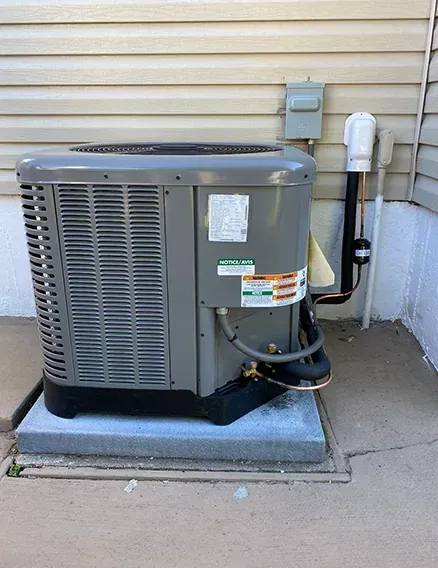
Why the shoreline is hard on equipment
Homes along the South Shore canals, the bays and the Sound sit in air that carries fine salt particles, especially on windy days. Those particles land on everything outside, including the aluminum fins and copper tubing of an air conditioner or heat pump. Salt attracts moisture and wet salt on metal speeds up corrosion. The outdoor coil is the part most exposed, because the fan pulls large volumes of air straight through it.
What the damage looks like
- White or gray powder or crust on the coil fins.
- Fins that crumble or flake when touched.
- Green or dark staining on copper lines and fittings.
- Rust on the cabinet, screws, base pan or fan guard.
- Corroded wire terminals and contactors inside the electrical panel.
How it affects performance
Corroded and clogged fins move less air and reject less heat, so the system runs longer to cool the house. As corrosion progresses it can open pinhole leaks in the coil tubing, which lets refrigerant escape. Low refrigerant means weak cooling and can damage the compressor if the system keeps running. Corroded electrical connections can cause intermittent failures that are hard to pin down without inspection.
What helps
Rinse the coil. A gentle rinse with a garden hose, from the inside out if accessible and with the power off, removes surface salt. Never use a pressure washer on coil fins; it bends them.
Professional coil cleaning. A technician cleans the coil with appropriate coil cleaner, straightens fins, checks for corrosion and inspects electrical parts. Near the water, many owners have this done more often than inland homes.
Placement. Where possible, an outdoor unit placed on the side of the house that is sheltered from the prevailing wind off the water collects less salt. Raised mounting helps in flood-prone areas.
Equipment choices. When replacing a coastal unit, ask about coil coatings and corrosion-resistant options offered for the model you are considering.
Inside the electrical panel
Salt does not stop at the coil. The electrical compartment of an outdoor unit holds the contactor, capacitor and wiring terminals. Salt film and moisture on these parts lead to pitting and loose or high-resistance connections. Symptoms include a unit that hums but does not start, one that starts only some of the time or one that stops on hot afternoons. A technician checks and cleans these connections during coastal maintenance and replaces parts that are corroded.
Heat pumps near the water
A heat pump runs in winter as well as summer, so its outdoor coil is exposed to salt and moisture all year. Coastal heat pumps benefit from coil checks in both seasons rather than once a year.
Boats face the same problem
Marine HVAC deals with salt every day. See marine HVAC for boat systems. If you have a boat as well as a waterfront home, see marine HVAC.
When to call
- The system runs constantly and the house is still warm.
- You see ice on the refrigerant lines.
- The outdoor coil is visibly crusted or crumbling.
- The system trips off on hot afternoons.
These point to coil, refrigerant or electrical problems that need a diagnosis. A maintenance contract keeps coil cleaning and corrosion checks on a schedule.
Coastal towns we serve
We work in waterfront towns including Freeport, Long Beach, Baldwin Harbor homes, Amityville, Lindenhurst, Babylon, West Islip and Oceanside. Book a coil cleaning or diagnostic, or read about AC repair. Find the shop on ADM Mechanical's Google Business Profile.
Frequently asked questions
Can I hose off my outdoor AC unit?
Yes, with the power off and gentle water pressure. A garden hose rinse removes surface salt and debris. Do not use a pressure washer, which bends the fins.
How often should a coastal AC coil be cleaned?
More often than an inland unit. A technician can judge from the coil condition during maintenance and set a schedule that fits your exposure.
Does salt air cause refrigerant leaks?
Corrosion from salt can eventually open small leaks in coil tubing and fittings. Regular cleaning and inspection catch corrosion early.
Related
More from the blog
Find us
ADM Mechanical, Farmingdale
640 Fulton St #9A
Farmingdale, NY 11735
Read Our Google Reviews Leave a Review
Nassau/Suffolk: 516-610-0233 NYC: 718-570-7587Get a technician on it.
Request service online or call the office. We confirm every request by phone.