

Home/ Blog/ Ductless mini-split vs central air
Ductless mini-split vs central air
If your home already has good ductwork that reaches every room, central air is usually the simpler choice. If you have no ducts, ducts that miss certain rooms, or one or two rooms that are always uncomfortable, a ductless mini-split is often the better fit. Many Long Island homes end up with both: central air for the main floors and a mini-split for an addition, attic or basement.
The deciding question: do you have usable ducts?
Central air moves cooled air from one indoor coil through ductwork to every room. If your home has a forced air furnace, the ducts are already there and adding or replacing central air is straightforward. If your home heats with a boiler and baseboard or radiators, there may be no ducts at all and adding them means opening walls and ceilings.
A ductless mini-split skips the ducts. An outdoor unit connects to one or more indoor heads through a small refrigerant line set run through the wall. Each head cools the space it serves. In most models it heats it too.
When central air makes sense
- The home has a furnace and ductwork in decent condition.
- You want one thermostat and even cooling across the whole house.
- You prefer equipment that is out of sight, with only grilles in each room.
- You are replacing an existing central system and the ducts are sized properly.
When a mini-split makes sense
- The house has no ductwork, common with boiler-heated homes.
- A dormer, sunroom, addition or converted garage never stays comfortable.
- You want separate temperature control room by room.
- You want efficient heating in spring and fall to take load off an oil or gas boiler.
Heating as well as cooling
Most mini-splits are heat pumps, so they heat as well as cool. Central air conditioners only cool, unless the outdoor unit is a heat pump. If you are thinking about cutting oil or gas use, this difference matters. See our heat pump page and the oil vs gas vs heat pump guide.
Appearance and noise
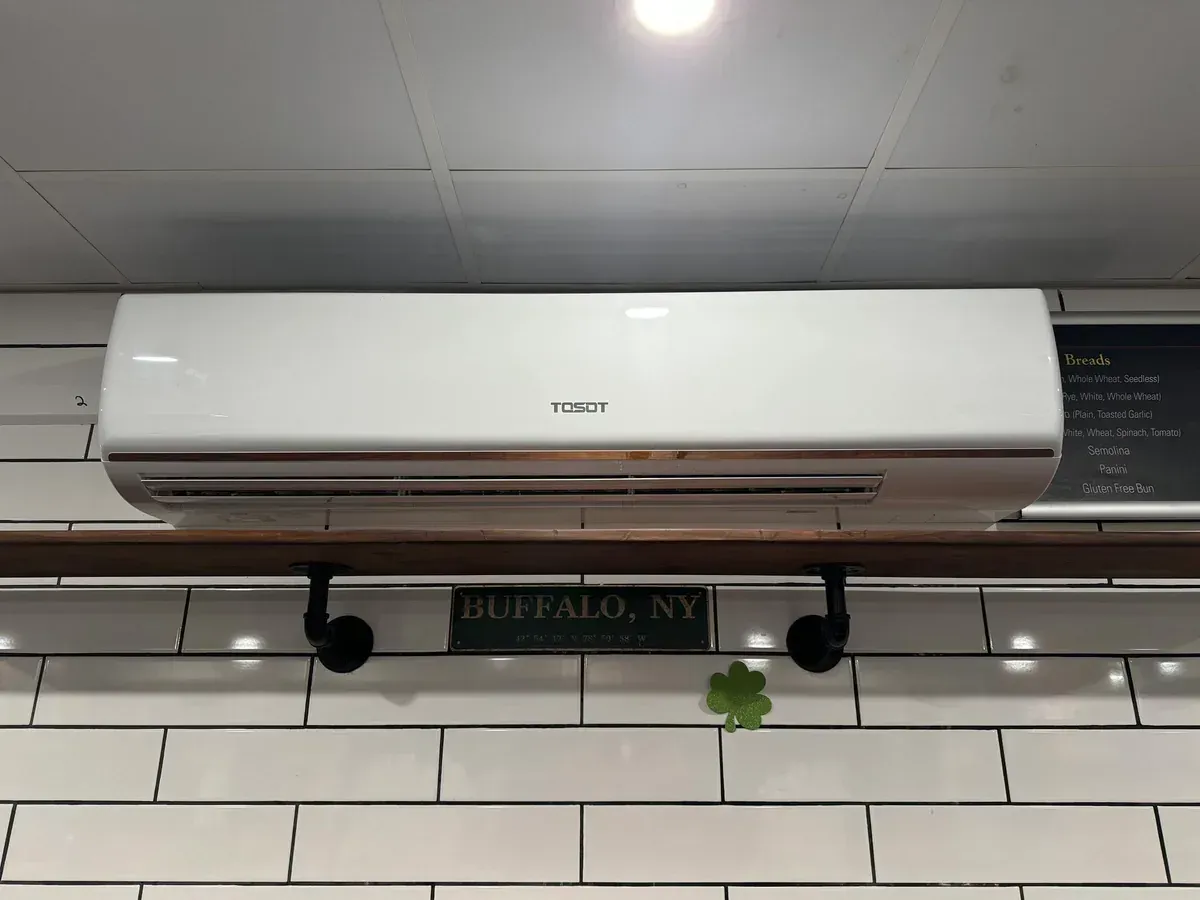
Mini-split indoor heads are visible on the wall or ceiling. Some owners do not mind, others prefer ceiling cassettes or ducted mini-split air handlers hidden in an attic. Central air hides everything except the grilles and outdoor unit. Both have quiet indoor operation when installed well. Outdoor unit placement matters for both, so think about bedrooms, patios and neighbors.
Maintenance differences
Central air needs filter changes, coil cleaning and drain checks. Mini-splits need their washable filters cleaned and their indoor heads cleaned periodically, because dust and moisture inside a head can lead to odors. ENERGY STAR recommends regular filter checks and seasonal professional maintenance for heating and cooling equipment. Both types benefit from a maintenance contract so nothing gets skipped.
Installation disruption
A mini-split install is usually less invasive: a small hole for the line set, a mounting bracket and an outdoor unit. Adding new ductwork for central air in a home without ducts is a bigger project. Replacing existing central air on existing ducts is usually simple.
Mixing both
Plenty of homes in towns like Huntington and Plainview keep central air for most of the house and add a mini-split for the room that never keeps up. That is often the most practical answer.
Questions to ask before you decide
- Which rooms are uncomfortable now and in which season?
- What heats the house today and do you want the new system to heat as well?
- Where would the outdoor unit go and is there a good path for the line set?
- If you have ducts, are they sized and sealed well enough to reuse?
- Would you rather see an indoor head on the wall or keep everything hidden?
Honest answers to these usually point clearly to one option or a mix of both.
Next step
Tell us about the rooms that bother you and what heats the house now. Request service or read more about ductless mini-splits and AC repair. Check rebates and incentives before you buy.
Frequently asked questions
Can a mini-split cool a whole house?
It can with multiple indoor heads, but whole-house coverage depends on the layout. Many homes use mini-splits for specific rooms and central air or another system for the rest.
Do mini-splits work in winter on Long Island?
Most mini-splits are heat pumps and heat in winter. Cold-climate models are designed to keep heating in colder weather. Whether one can be the main heat for a room depends on the space and the model.
Is central air or a mini-split easier to maintain?
Both need regular care. Central air needs filters and coil cleaning; mini-splits need filter and indoor head cleaning. A seasonal maintenance visit covers both.
Sources
Related
More from the blog
Find us
ADM Mechanical, Farmingdale
640 Fulton St #9A
Farmingdale, NY 11735
Read Our Google Reviews Leave a Review
Nassau/Suffolk: 516-610-0233 NYC: 718-570-7587Get a technician on it.
Request service online or call the office. We confirm every request by phone.